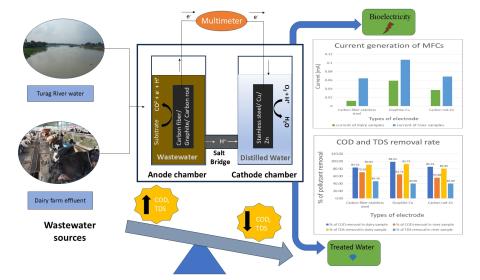
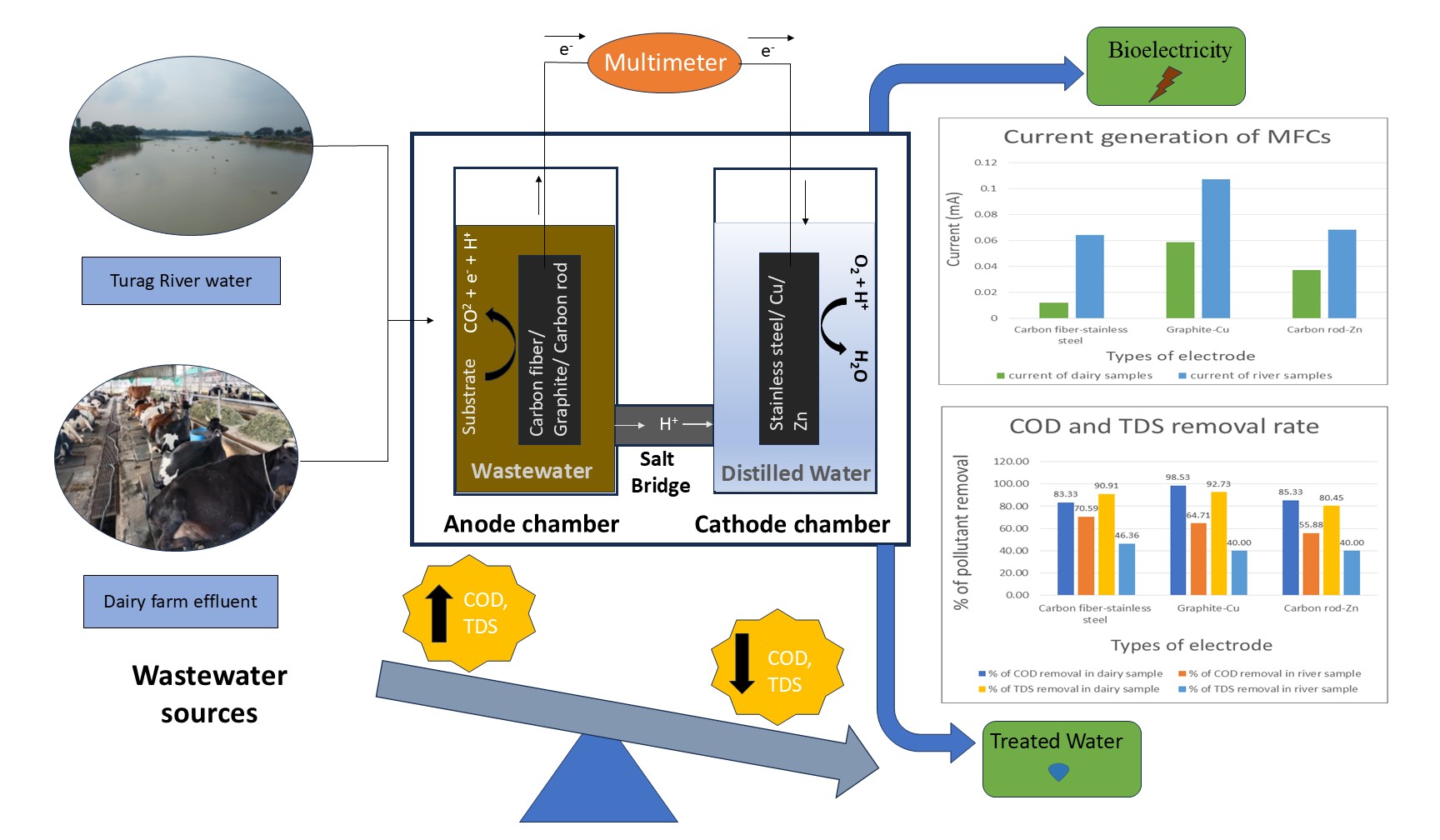
The discharge of untreated wastewater into water bodies creates serious ecological and health problems, highlighting the necessity for a sustainable, energy-efficient treatment solution. Microbial fuel cells (MFCs) have emerged as a promising bioelectrochemical technology that can treat wastewater while generating electricity from organic matter. This study evaluated double-chambered MFCs for concurrent electricity generation and wastewater treatment from dairy farm effluent and Turag River water over a 25-day operation. Three anode-cathode configurations: Graphite-Cu (G-Cu), Carbon fiber-Stainless steel (Cf-SS), and Carbon rod-Zn (CR-Zn), were compared for their electrochemical performance and pollutant removal efficiency. In dairy farm effluent, G-Cu produced the highest peak voltage (706.67 mV), current (0.2667 mA), and power (0.1884 mW) with 98.53% COD removal. In Turag River water, Cf-SS produced the highest voltage (676.67 mV) with COD removal (70.59%), while CR-Zn produced the highest current (0.2667 mA) and power (0.1751 mW). COD, TDS, TSS, and turbidity were reduced by the MFCs, although the removal efficiency varied among electrode configurations and wastewater types. Changes in pH were also observed after treatment. In addition, bacterial isolates obtained from the layer formed on the anode electrodes after 25 days of operation were identified using MALDI-TOF MS (Bruker MALDI Biotyper). The identified bacteria included species previously reported to have electroactive potential, suggesting their possible association with electricity generation in MFCs. Escherichia coli was also detected in both wastewater types, which may indicate fecal or domestic contamination. Overall, the study demonstrated the feasibility of using different electrode configurations for treating real wastewater while generating electricity under laboratory conditions. Among the tested configurations, G-Cu showed comparatively consistent electrical and treatment performance, although the highest performance for individual parameters varied among the electrode configurations and wastewater types.