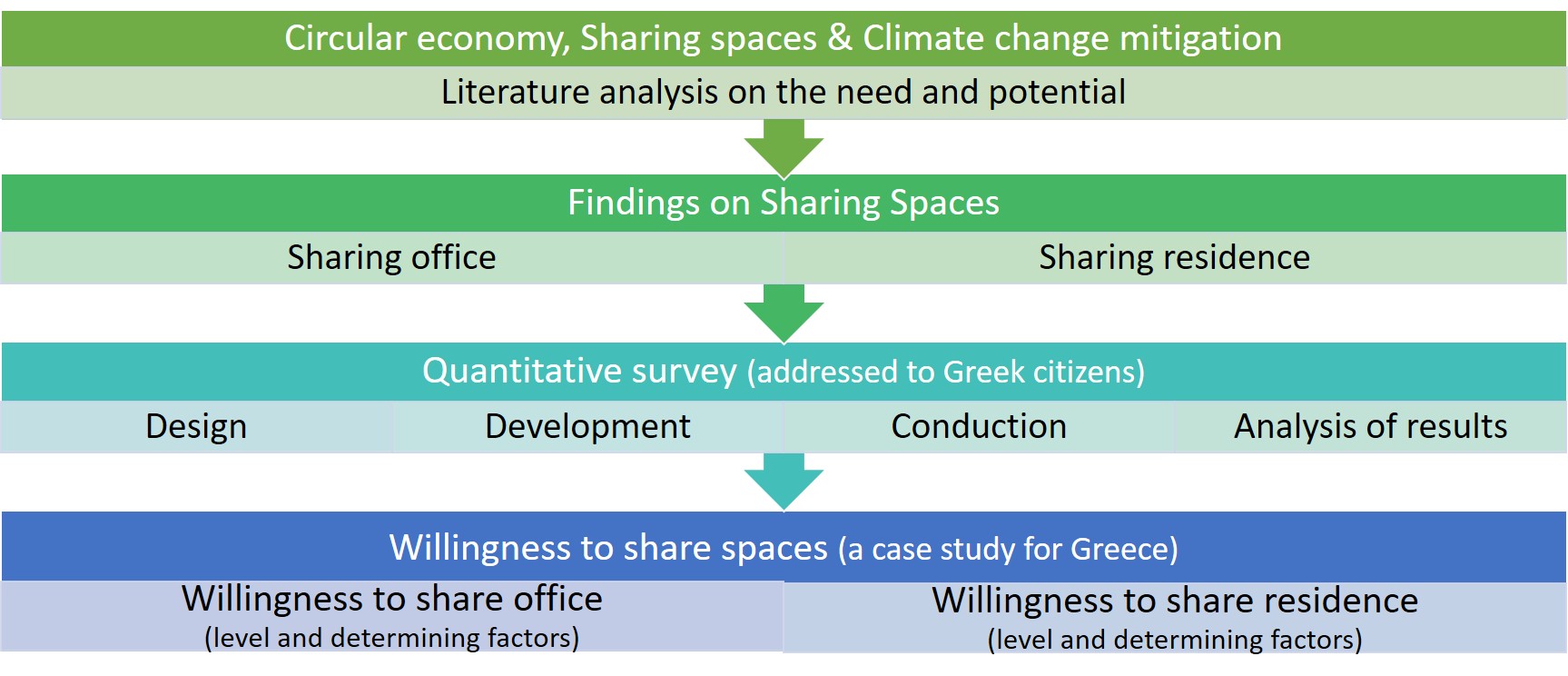
The European Union aims for climate neutrality by 2050, emphasising the circular economy as a key strategy, especially in the construction sector, a significant CO2 emitter. The successful implementation of circular economy practices, such as using low-carbon materials, renovating buildings, and sharing spaces, depends on understanding citizen behaviour and the factors influencing their adoption. The identification of citizens' perceptions and behaviour is the main objective of this study, which is conducted through an empirical survey involving approximately 500 citizens in Greece. The study analyses survey results on citizens' attitudes and motivational factors towards sharing spaces, a practice aligned with the "rethink" circular economy strategy. Using descriptive statistics, this research examines citizens' willingness to share office and living spaces, as well as the factors motivating them. The analysis revealed that Greek citizens are positive about sharing office spaces, but rather negative about sharing residences with non-family members. Moreover, regression models identify socioeconomic and other determinants that, on a statistically significant level, influence Greek citizens' willingness to share spaces, such as age, political ideology, residential location, household size, and environmental concerns. The study is considered important for setting the necessary policies to enhance circularity and the adoption of sharing spaces in Greece.