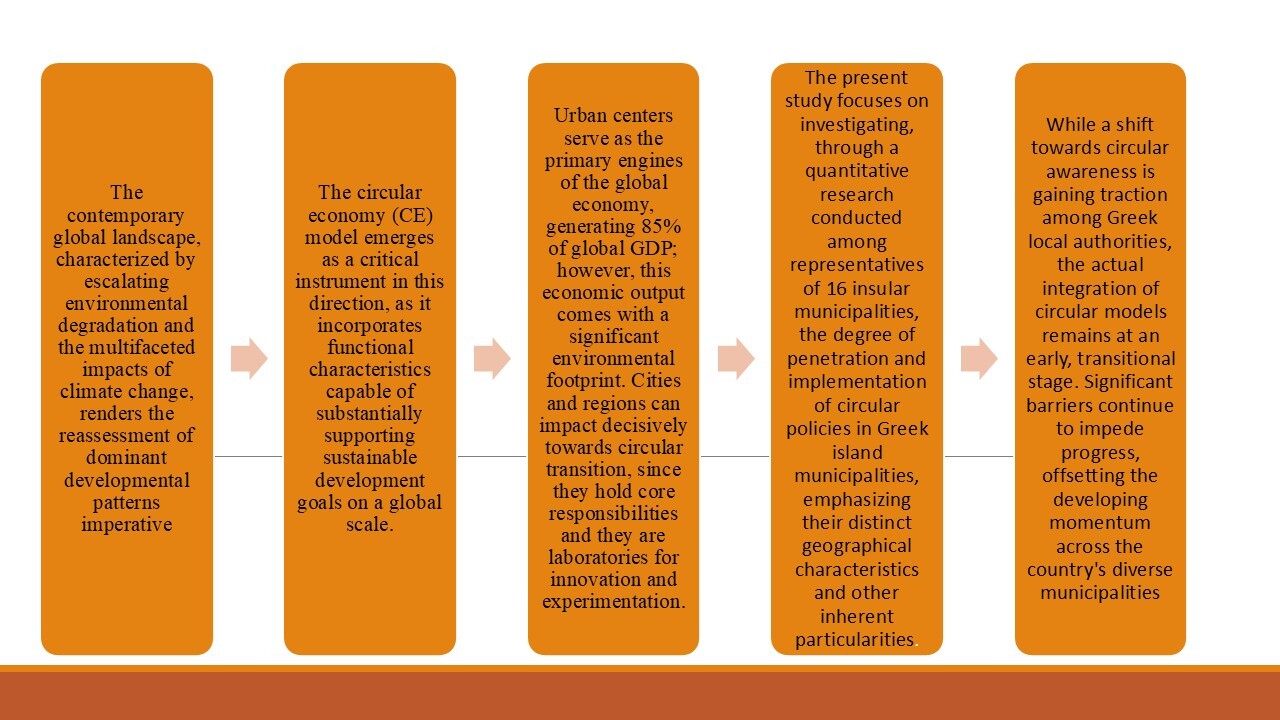
The environmental degradation, the excessive use of natural resources, the climate crisis as well as the social and economic inequalities are among the major threats facing the planet and asking for immediate action. The prevailing linear production and consumption model seems unable to provide the required solutions to these problems and hence the use of an alternative model, that of circular economy, may offer a better way of addressing those issues. The present paper exposes the new trends in circular economy models, outlines their basic principles and highlights the potential benefits but also the possible pitfalls stemming from their application. On a second level, it focuses on the Greek island municipalities and presents the main findings of relevant research which has been carried out. The research collected an analyzed the views of elected officials and members of administrative staff from sixteen Greek island municipalities regarding their extent of familiarity with the concept of the circular economy, the current level of implementation of circular policies in their municipalities, the main barriers faced, the main strategies required to overcome them and further promote circular policies and finally, the perceived benefits arising from the adoption of circular practices.