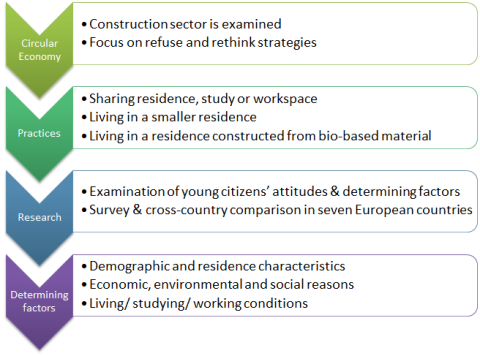
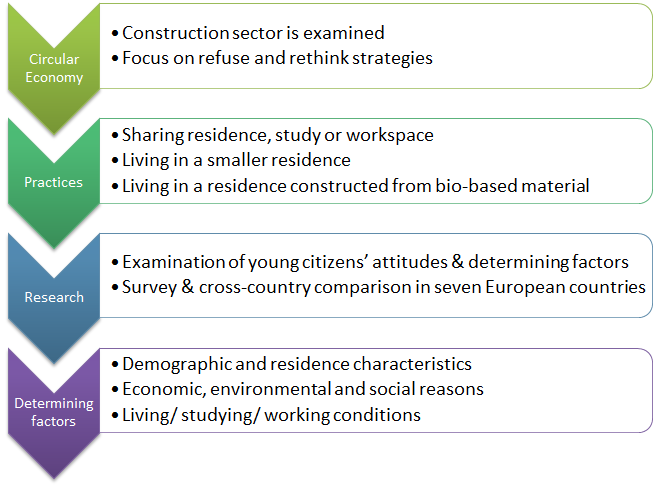
The present study focuses on young citizens' attitudes towards high-level circular-economy strategies such as "Rethink" and "Refuse" in the construction sector. In this respect, young citizens' attitudes and determinants of adopting CE practices in construction, including sharing residences, living in smaller or bio-based buildings, and using shared study or workspaces, were examined. A survey was conducted between May 2025 and January 2026 across seven European countries (Denmark, Germany, Greece, Italy, Portugal, Spain, and the UK), including 358 participants aged 40 or younger. The survey unveiled interesting attitudes, with a general openness to adopting certain CE practices, such as living in smaller or bio-based constructed homes, and sharing study and workspaces. Economic reasons emerge as the primary motivator for sharing a residence or living in a smaller one, while environmental considerations are particularly influential in decisions related to bio-based materials. In cases of sharing study or work spaces, the provided conditions are perceived as the primary factor. Respondents' attitudes vary, influenced by factors such as income, age, and residential characteristics. Moreover, cross-country analysis revealed variations in willingness to adopt specific CE practices, highlighting the role of national context in shaping CE preferences. The findings highlight the importance of tailored strategies to promote CE adoption, emphasizing awareness of environmental benefits, targeted policies, and the need to address economic barriers.