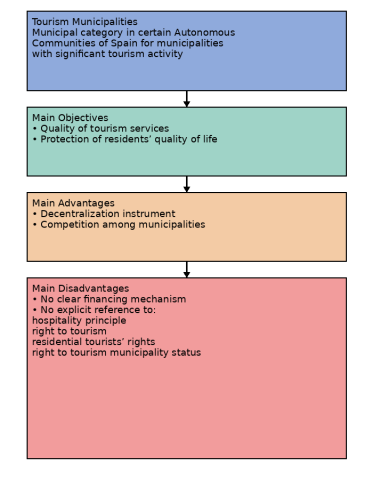
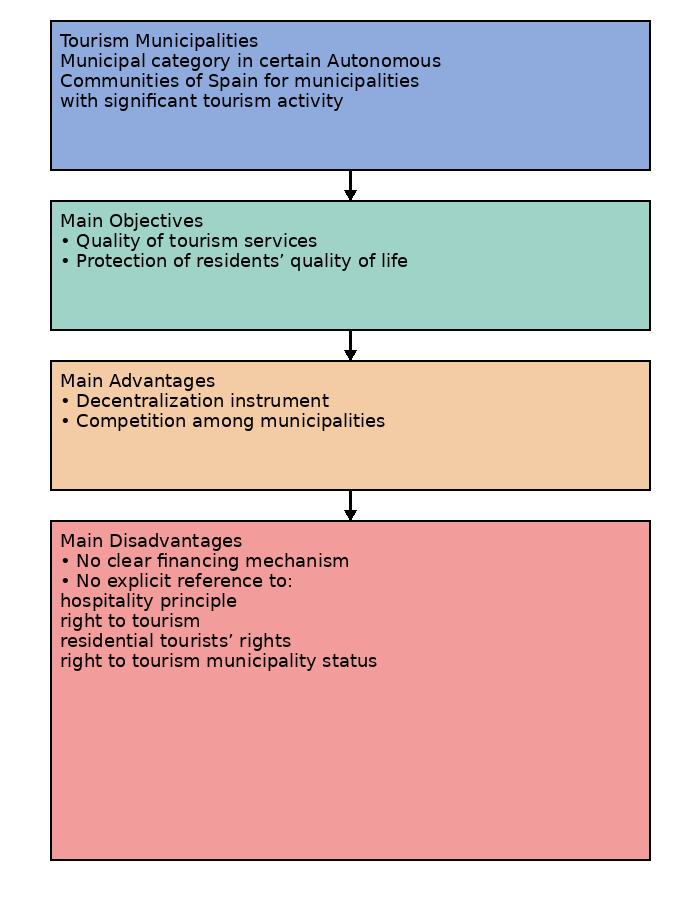
The institution of tourism municipalities in Spain is regulated in differentiated form by those Autonomous Communities that have chosen to adopt it and applies to municipalities characterized by significant tourism intensity and seasonal population fluctuations. The framework seeks primarily to ensure quality in the provision of services to occasional traveling tourists, a goal closely linked to the broader objective of safeguarding residents’ quality of life. However, the establishment of an effective financing mechanism remains unresolved, raising questions about the long-term viability of the model. In addition, the article offers the first comprehensive assessment of the normative deficits of tourism municipalities, advocating the integration of hospitality and right-to-the-city principles. Through doctrinal review and an analysis of the Andalusian case, it further proposes the introduction of a “right to tourism municipal status”.