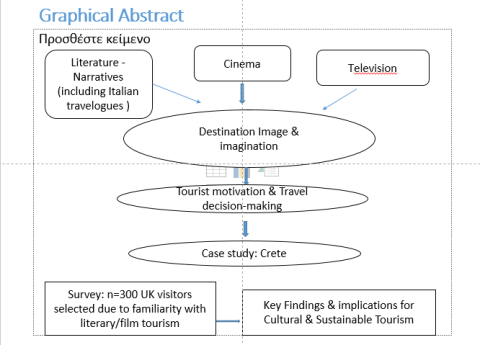
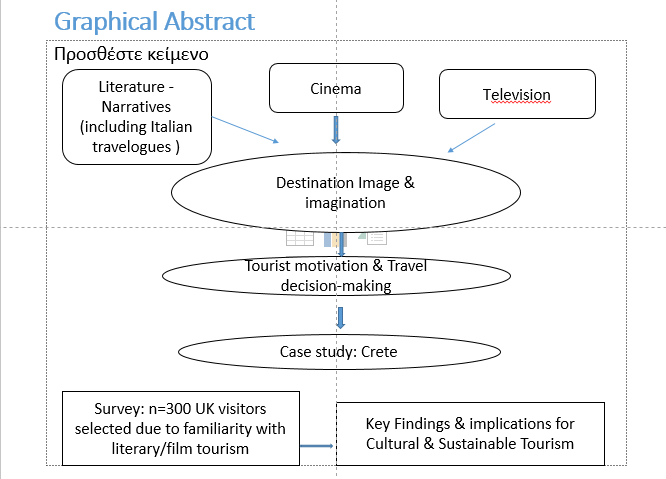
This article examines the role of cultural narratives in shaping and reinforcing tourist motivation, with a focus on literary tourism and, more specifically, Italian travelogues texts referring to Crete. It analyses how literature, combined with cinema, television productions and other narrative media, contributes to the construction of symbolic representations of the destination and influences travel decisions. The empirical research is based on a sample of 300 British tourists who visited Crete and explores the degree of influence of narrative frameworks on tourist behavior and motivations for visiting. British visitors were selected due to their long-standing tradition and familiarity with literary and film-induced tourism, making their perceptions particularly relevant for assessing the impact of narrative forms, including Italian travelogues. The results show that cultural and literary narratives are powerful factors of attraction, reinforcing the search for authentic, lived and meaningful experiences. The majority of participants reported being familiar with the concept of “literary tourism” and recognized its decisive influence on their choices and behavior, while almost all expressed a willingness to organize trips to destinations linked to writers, literary works or audiovisual productions. In this context, Crete appears not only as a well-established tourist destination, but also as a multidimensional cultural and literary location, where travelogues could be transformed into experiences and symbolic capital for sustainable tourism development.