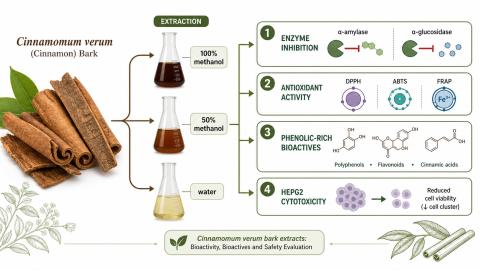
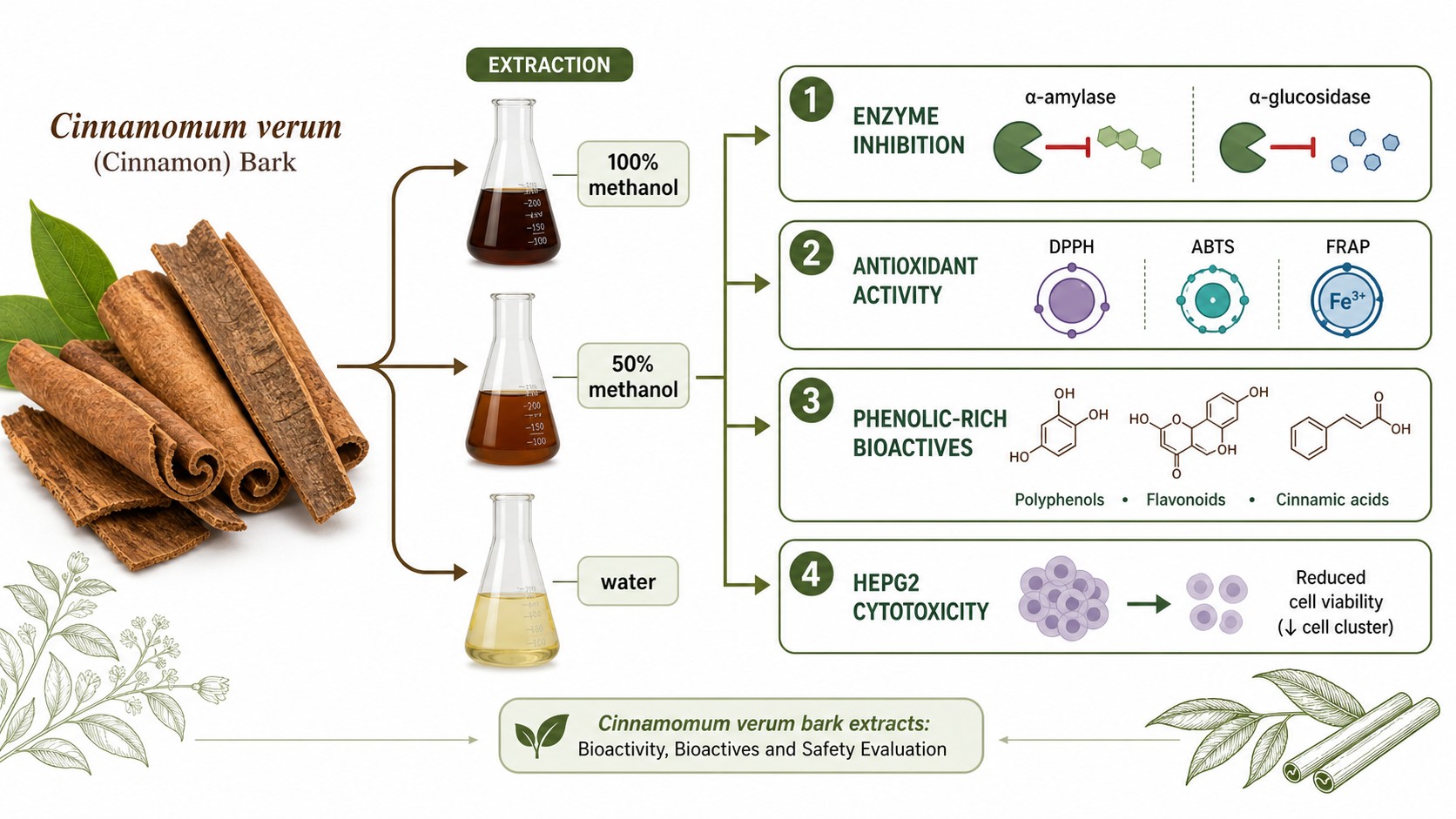
The bark of C. verum is extensively utilized as a culinary spice and traditional cure; however, a systematic assessment of its enzyme-inhibitory, antioxidant, and cytotoxic capabilities is crucial to substantiate its usage in public health. This study sought to evaluation the in vitro inhibitory effects of C. verum bark extracts on carbohydrate-digesting enzymes (α-amylase and α-glucosidase) and to quantify their phenolic content and antioxidant activity. Bark powders were extracted using 100% methanol, 50% methanol, and distilled water. Methanolic extracts (100% and 50%) demonstrated markedly superior inhibition of α-amylase and α-glucosidase relative to the aqueous extract, in a concentration-dependent fashion. All extract concentrations demonstrated substantial DPPH and ABTS scavenging activity, with IC50 values reflecting improved antioxidant efficacy for methanolic fractions. FRAP values were raised and uniform among solvents, exhibiting a marginal preference for 100% methanol. C. verum extracts diminished HepG2 cell viability in a dose-dependent manner, with IC50 values (64.23±15.85; 59.75±12.5; 44.65±8.54), respectively. The findings indicated that C. verum bark, especially the methanolic extract high in polyphenols, exhibits both enzyme inhibitory and antioxidant properties, highlighting its potential as a natural source of bioactive compounds for metabolic and oncological public health applications.