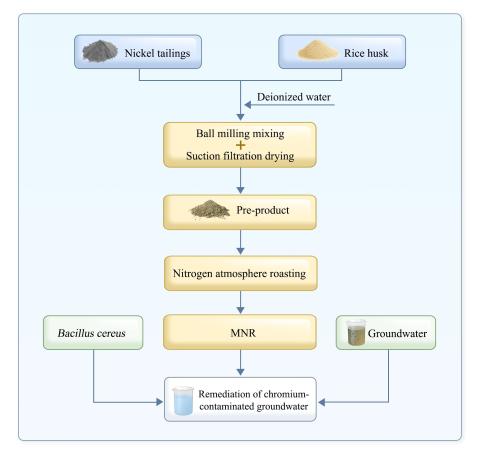
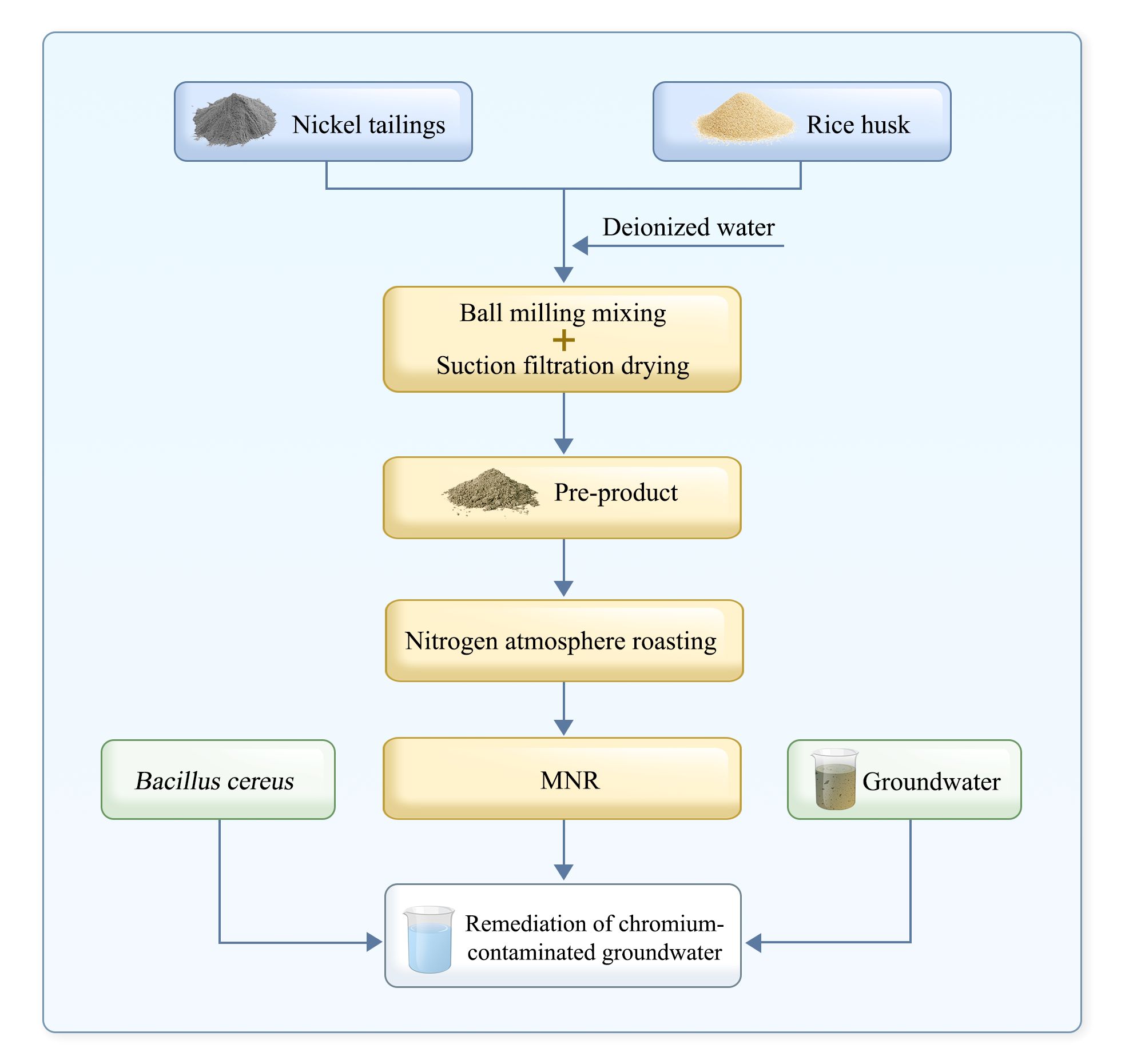
Hexavalent chromium (Cr(VI)) is a toxic heavy metal pollutant posing severe risks to ecosystems and human health. Herein, a modified nickel tailings–rice husk biochar composite (MNR) was fabricated via co-pyrolysis of nickel tailings and rice husk powder, and coupled with Bacillus cereus to construct a Cr(VI)-contaminated groundwater remediation system. Under optimized conditions, 99.81% ± 0.06% of Cr(VI) was removed within 18 h from simulated groundwater with an initial Cr(VI) concentration of 50 mg L⁻¹. The highly toxic and mobile exchangeable Cr(VI) was reduced to less toxic Cr(III), which was further immobilized as solid-phase hydroxide precipitates, enabling stable chromium sequestration in the aqueous system. This work provides an alternative strategy for Cr(VI)-contaminated groundwater remediation, with advantages of high removal efficiency and waste valorization of industrial and agricultural solid wastes.