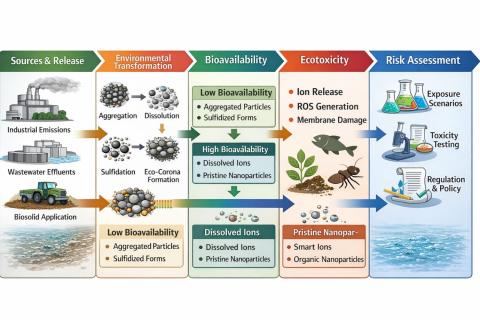
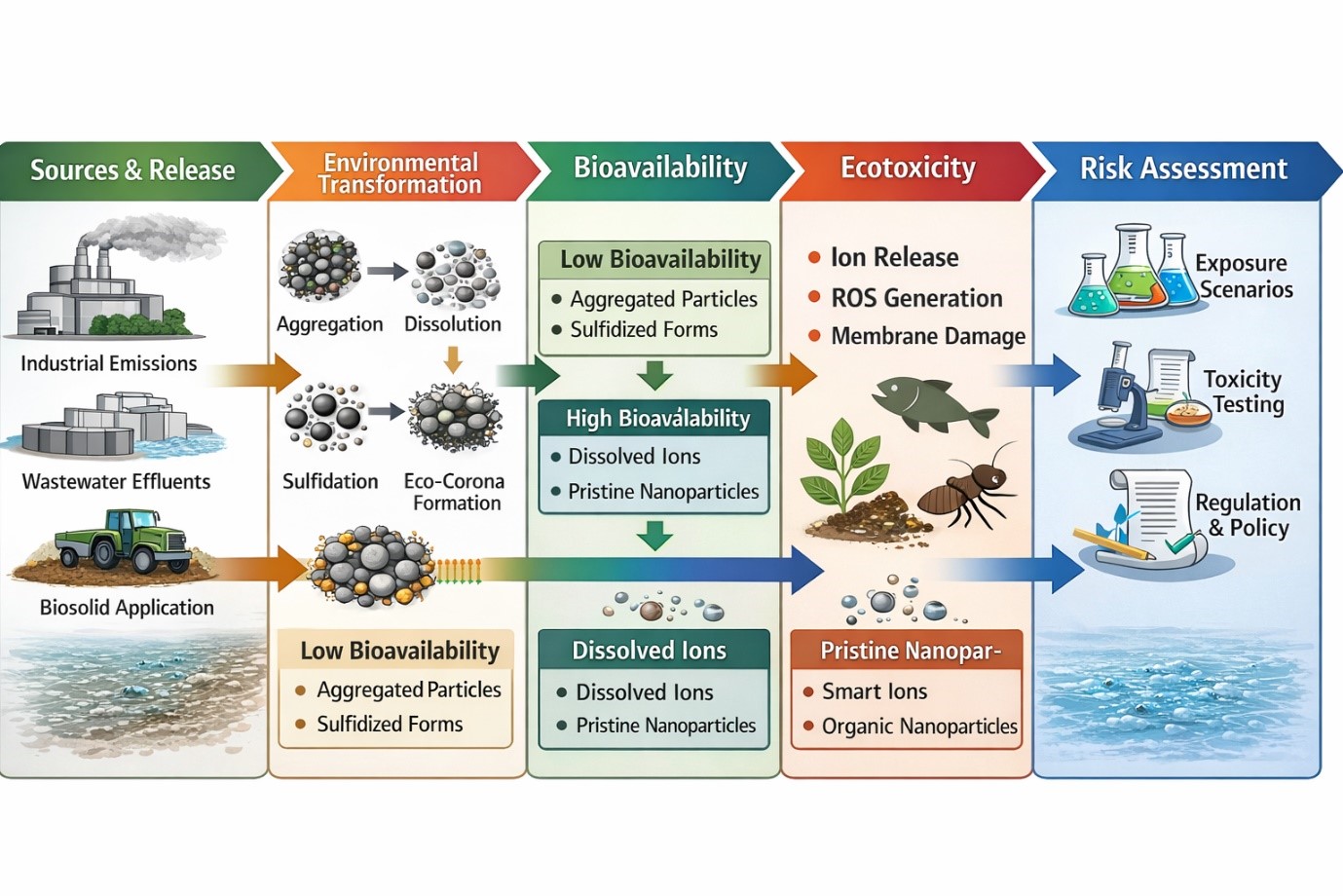
Engineered nanoparticles (ENPs) are utilized in many ways in various industries, consumers and agriculture. They can also enter the environment through wastewater treatment plants and the use of bio-solids. This review paper examines the environmental fate transformation, the ecotoxicological impacts, analytical detection and risk assessment of the main types of ENPs like TiO₂, Ag, ZnO, and CeO₂. Once released, nanoparticles transform by processes such as aggregation dissolution sulfidation and organic matter coating, which change their toxicity and mobility. Environmental concentrations of nanoparticles have been reported to vary from μg/L to mg/L in surface waters whereas soils have been measured at mg/kg levels. Toxicological studies on aquatic and terrestrial organisms are consistent in showing adverse effects of nanoparticles mainly through ion toxicity, reactive oxygen species generation and interfacing with membrane. However, an important observation is that silver nanoparticle toxicity is decreased 5-10 times by sulfidation. Detection of these nanoparticles in the environment has become possible with the development of analytical techniques such as single-particle ICP-MS. However, differentiating engineered nanoparticles from naturally occurring ones continues to be a daunting task. There is a strong case for the regulation of nanoparticles on a nano-specific basis so that quality criteria can be set and safe-by-design methods ushered in for the continuous development of nanotechnology.