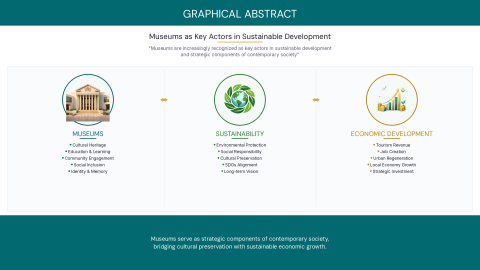
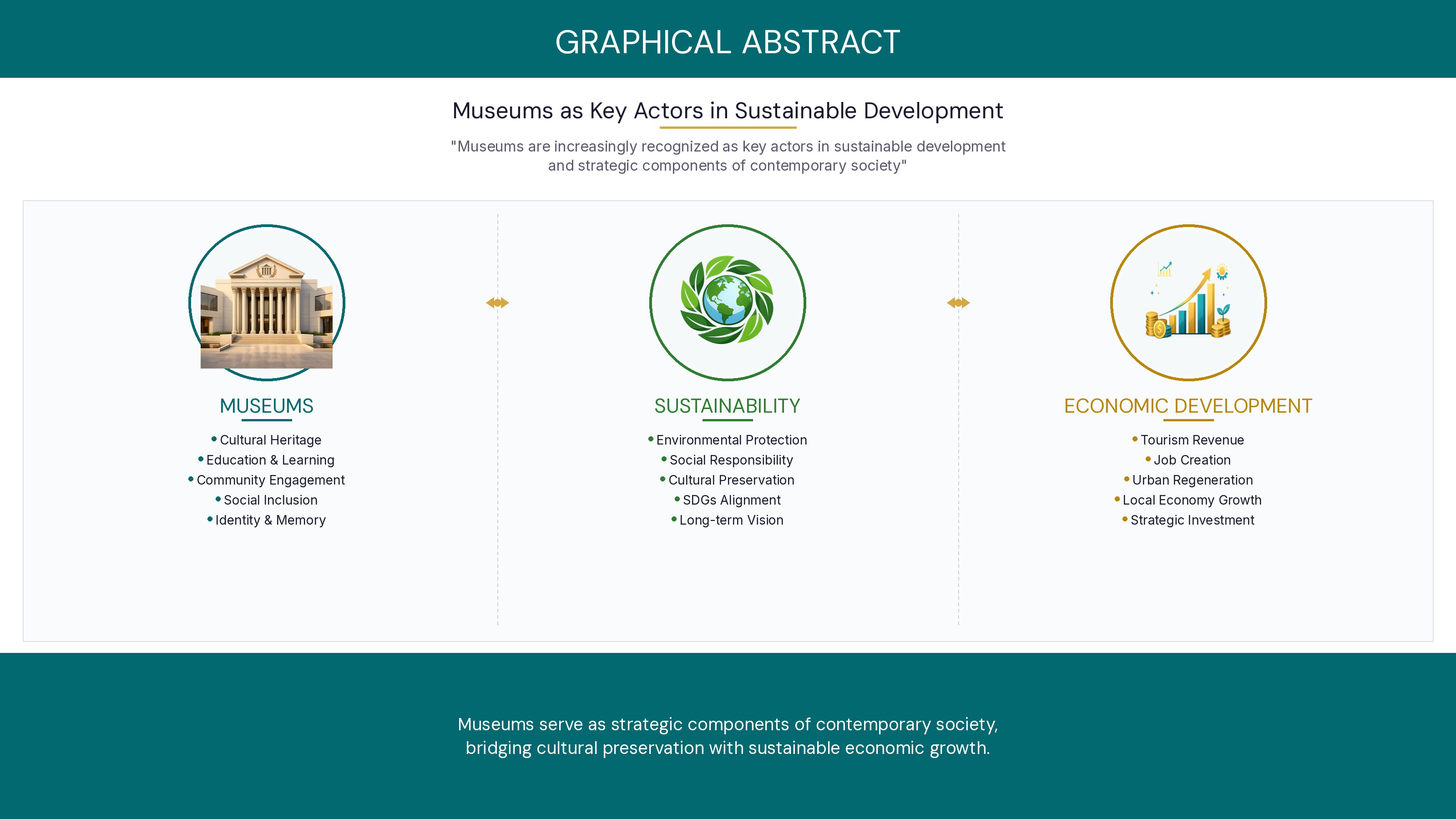
Museums are increasingly recognized as key actors in sustainable development and as strategic components of contemporary tourism systems. Beyond their traditional role as custodians of cultural heritage, museums today function as educational platforms, spaces of social dialogue, and catalysts for sustainable tourism practices. Drawing on the emerging paradigm of museums as laboratories for sustainable development, this paper explores how these institutions activate their collections and spaces to address the environmental, social and economic challenges of the Anthropocene, linking operational change with broader transformations in visitor experience and destination management.
This paper examines the interrelationship between museums, tourism, and sustainable green development in Greece. Drawing on preliminary findings from an ongoing qualitative research project based on semi-structured interviews with museum professionals, as well as secondary analysis of tourism and cultural policy documents, the study explores how Greek museums engage with sustainability agendas, contribute to the United Nations Sustainable Development Goals (SDGs), and shape more responsible tourism experiences. The paper argues that museums can play a pivotal role in fostering climate literacy, strengthening local identity, and supporting resilient tourism development, while also identifying structural, economic, and governance challenges that constrain the effective integration of sustainability into museum and tourism policy.