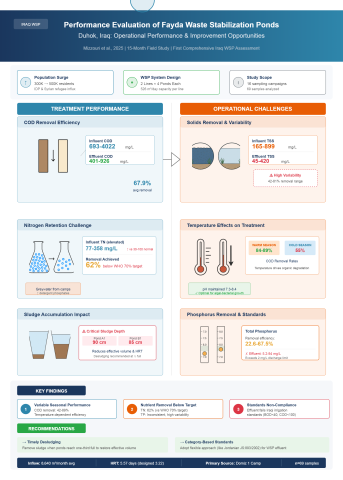
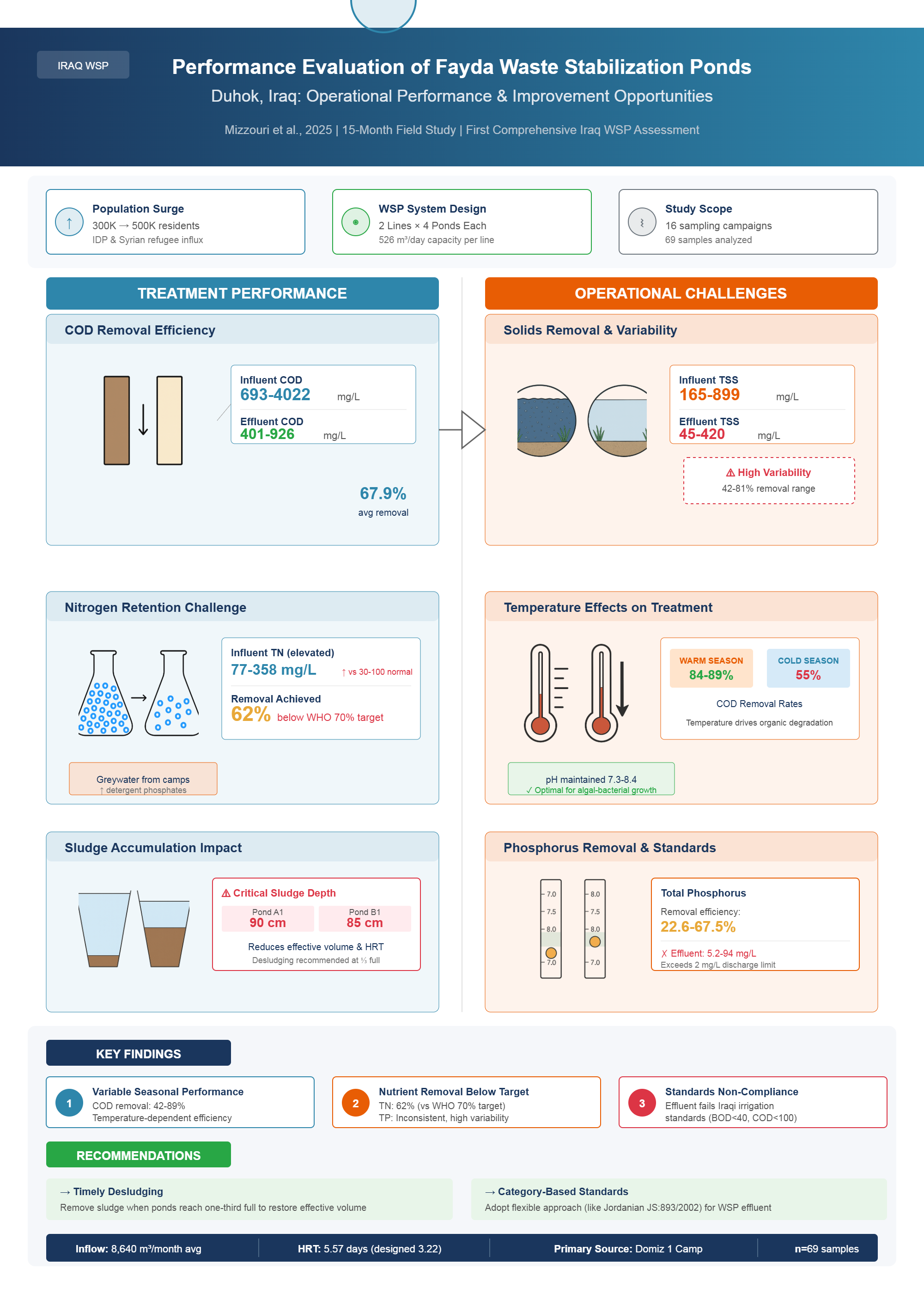
This study evaluated the operational performance of the Fayda Waste Stabilization Ponds (WSPs) in Duhok, Iraq. Sixteen grab-sampling campaigns were conducted over a 15-month monitoring period, generating 69 wastewater samples from influent sources, pond outlets, and final effluent. Field observations, physicochemical analyses, operational monitoring, and meteorological data were used to assess pollutant removal, identify operational constraints, and evaluate compliance with wastewater reuse standards. Results showed substantial seasonal and operational variability. COD removal ranged from 42.1% to 89.3%, with effluent COD concentrations of 372–926 mg/L. TSS removal ranged from 42.31% to 81.08%, while TN removal averaged approximately 65%, remaining below the recommended 70% target. TP removal ranged from 22.6% to 67.5%, indicating inconsistent nutrient removal. Effluent quality frequently failed to meet Iraqi standards for direct discharge or agricultural reuse. Performance limitations were mainly linked to variable influent characteristics, high nutrient loading, graywater inputs, temperature effects, sludge accumulation (90 cm and 85 cm in anaerobic ponds), and improper wastewater disposal. The study recommends influent equalization, controlled loading, regular desludging, improved infrastructure. This study provides the first comprehensive full-scale in situ assessments of WSP performance in Iraq and proposes practical operational measures and a category-based approach for wastewater reuse standards.