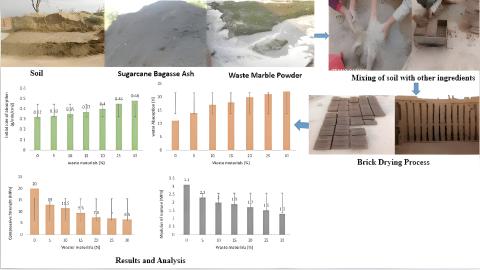
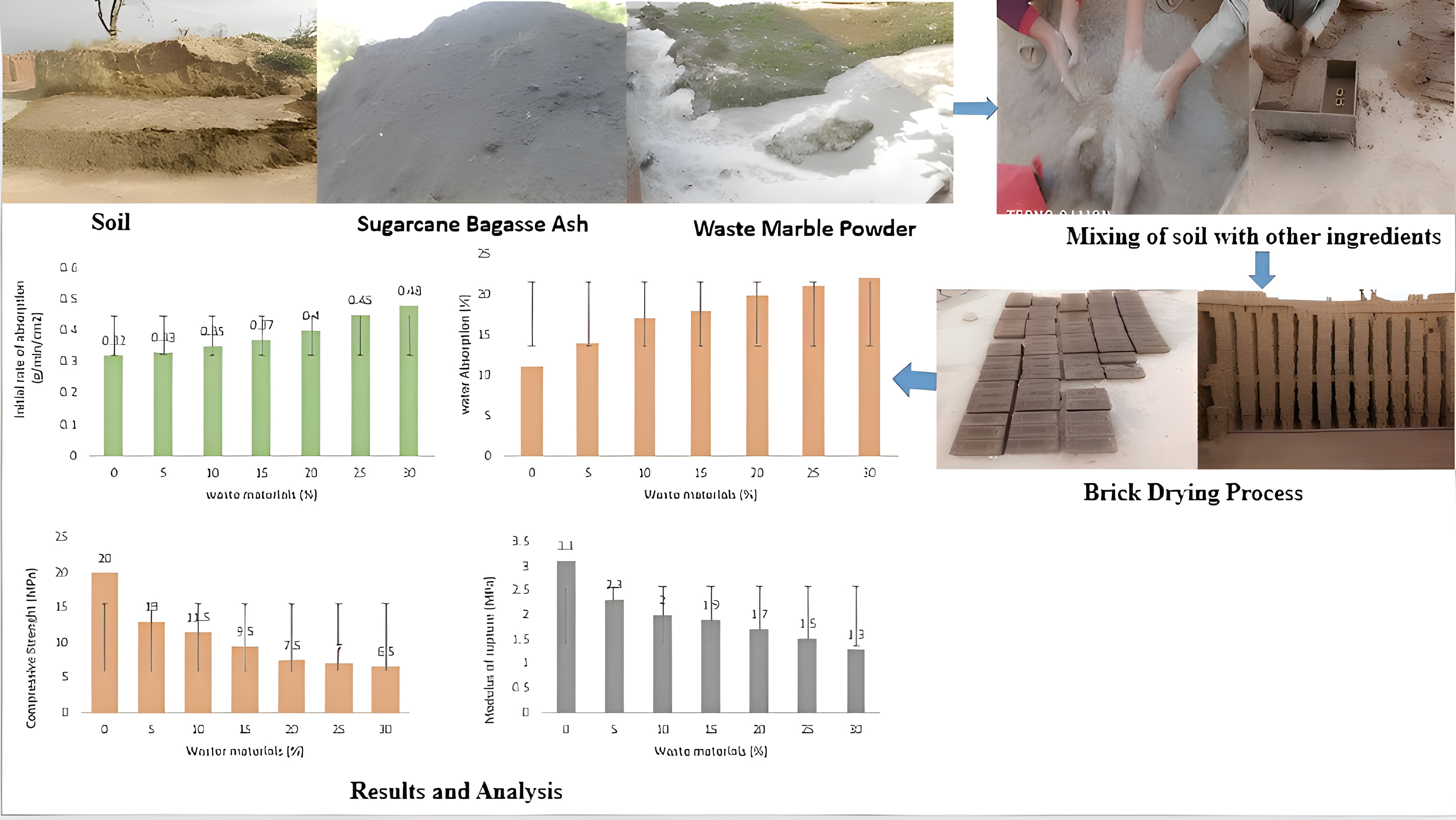
This study addresses the environmental sustainability of making fired clay bricks using Waste Marble Powder (WMP) and Sugarcane Bagasse Ash (SBA) to substitute up to 50 percent of virgin clay. The physical, mechanical, and durability properties of experimental batches with different WMP and SBA content (0-30%) were compared based on the ASTM standards. The studies found an ideal combination of 10% WMP and 5% SBA that had a compressive strength of more than 8 MPa, which was a structural requirement. The bricks were about 14 percent lighter than the regular clay bricks and had an average water absorption (11-18 percent) that was within the ASTM C62 durability range. Moreover, the optimized bricks showed a high freeze-thaw and sulfate attack resistance, which was credited to a fine pore structure and the improved strength of the interlocking between the cementitious mass and silica-rich SBA, due to the pozzolanic interaction between the calcium-rich WMP and the silica-rich SBA. This paper confirms that a synergistic application of WMP and SBA presents a sustainable, green solution to the manufacturing of bricks, minimizing the consumption of clay, eliminating the disposal of industrial and agricultural wastes in landfills, and the carbon footprint of the construction industry.