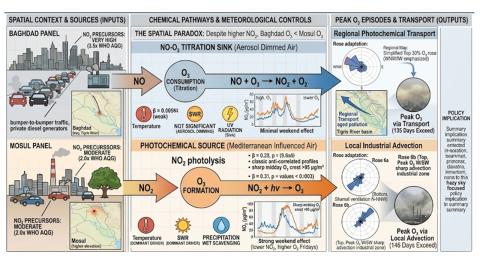
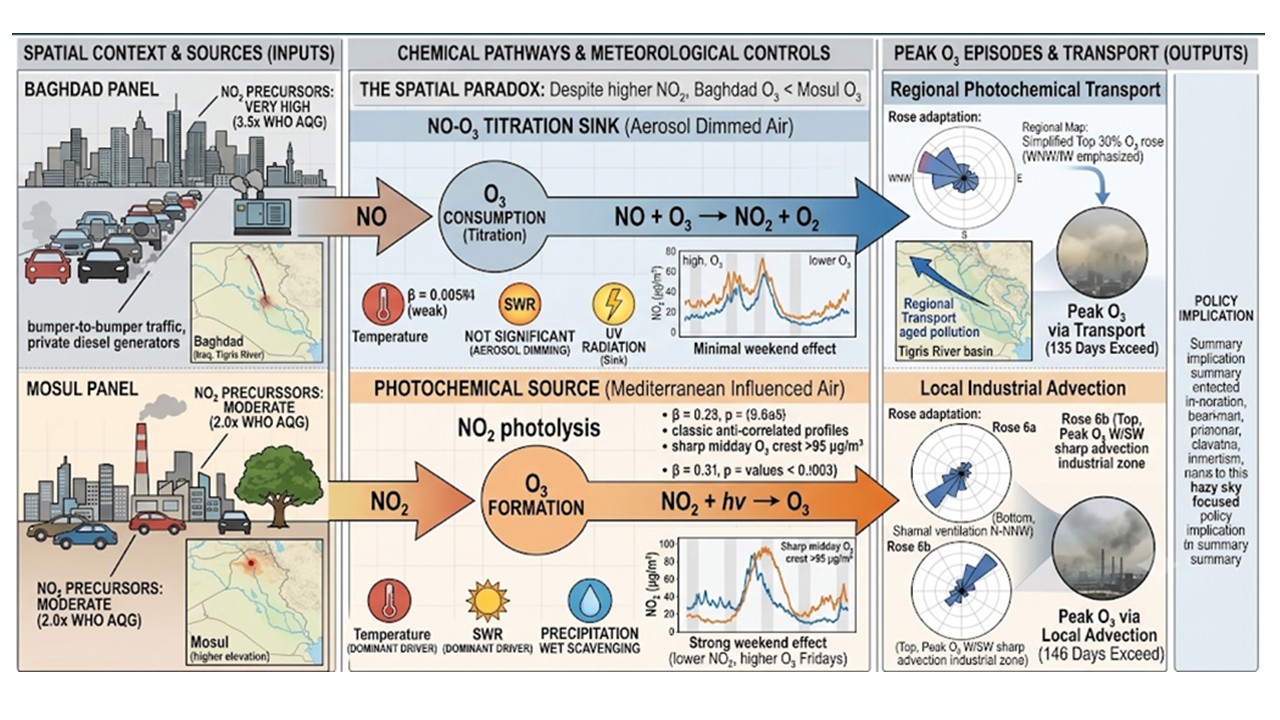
This study compares the spatiotemporal behavior of NO2 and O3 in Baghdad and Mosul using 2022 monitoring data to assess the influence of meteorological factors. Baghdad recorded substantially higher annual NO2 concentrations (36.7 µg/m³) than Mosul (21.2 µg/m³), while Mosul exhibited higher annual O3 levels due to weaker NO-titration. Both cities frequently exceeded the WHO 8-hour O3 guideline. Temperature was the dominant driver of O3, whereas atmospheric pressure promoted NO2 accumulation and wind speed enhanced pollutant dispersion. Shortwave radiation strongly influenced O3 formation in Mosul, while UV radiation played a greater role in Baghdad because of aerosol dimming. Pollution rose analysis indicated that peak O3 in Mosul was mainly associated with local industrial emissions, whereas in Baghdad it was linked to regional photochemical transport along the Tigris River basin. These findings emphasize the importance of city-specific air quality management strategies.