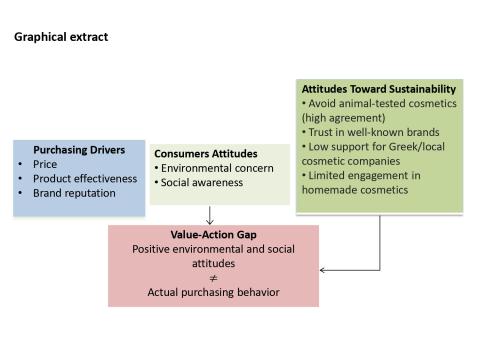
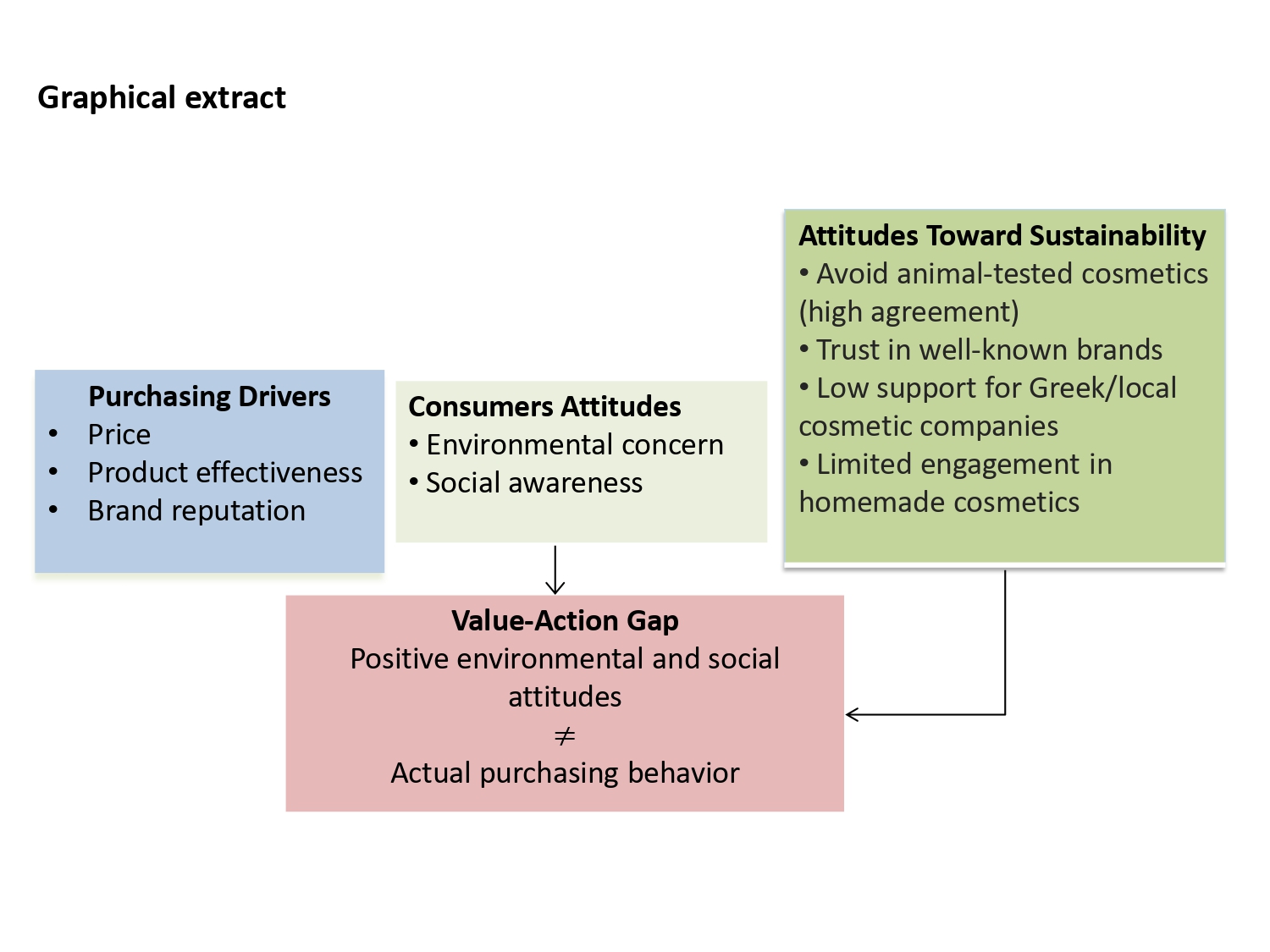
This study examines Greek consumers’ environmental and social attitudes, perceptions, and purchasing intentions regarding cosmetic products, with particular emphasis on sustainability and corporate social responsibility (CSR). A quantitative cross-sectional design was employed using an anonymous online questionnaire administered between January 12 and February 26, 2025. The final sample consisted of 375 respondents from various age groups, primarily residing in the Attica region. Data were analyzed using descriptive statistics and chi-square (χ²) tests of independence, with effect sizes calculated through Cramer’s V.
The findings indicate that functional and economic criteria such as product effectiveness, price, quality, and brand reputation remain the dominant determinants of cosmetic purchasing behavior. Although environmental and social factors are recognized, they operate mainly as secondary considerations. Cruelty-free certification emerged as the most influential sustainability attribute, with a notable proportion of participants expressing willingness to pay a premium for products not tested on animals. In contrast, willingness to pay more for eco-friendly packaging or socially responsible production was more limited, suggesting the presence of an attitude–behavior gap. Gender significantly influenced ethical purchasing tendencies, while income and education showed weaker or non-significant effects. The study contributes empirical evidence from the Greek market and offers managerial and policy implications.
Keywords: Ethical consumption, Sustainable consumer behavior, Cosmetics industry, Cruelty-free products, Willingness to pay, Corporate Social Responsibility (CSR), Greece