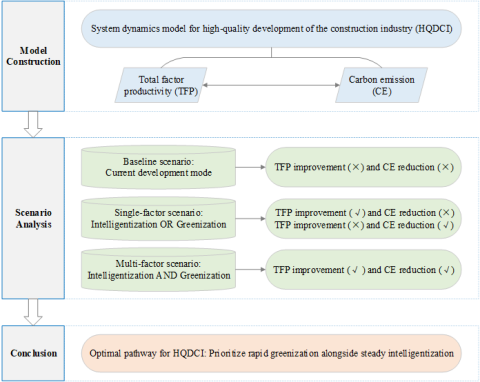
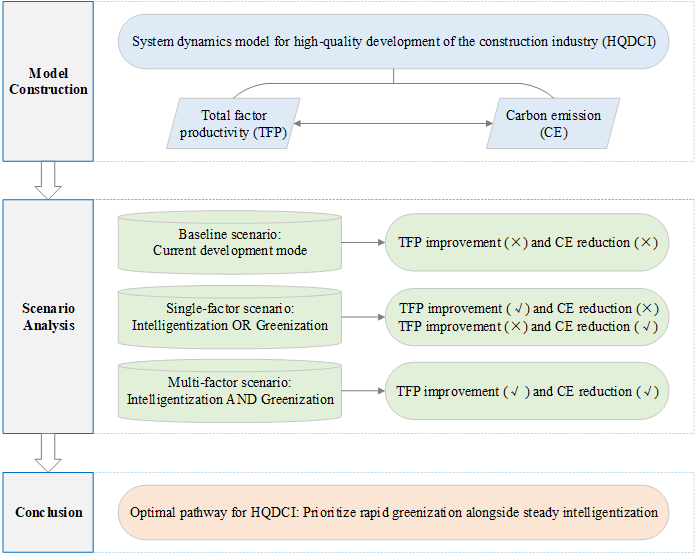
This study aims to identify an optimal pathway for achieving high-quality development of the construction industry (HQDCI) by examining how total factor productivity (TFP) improvement and carbon emission (CE) reduction can be advanced synergistically. A system dynamics model integrating TFP and CE was developed, using which the long-term evolution of China’s HQDCI was simulated under baseline, single-factor, and multi-factor scenarios. The results demonstrated that: (1) maintaining the current development mode would prevent the construction industry from achieving significant TFP growth and reaching the carbon peak before 2030; (2) pursuing either greenization or intelligentization alone cannot simultaneously deliver both TFP growth and CE reduction; and (3) the optimal pathway for HQDCI is to prioritize rapid greenization alongside steady intelligentization. This study advances the understanding of the intrinsic mechanisms and long-term evolutionary dynamics of HQDCI when subject to dual TFP and CE constraints, and provides a systematic strategy for enhancing productivity while reducing emission.