Environmental integrity and ecological continuity have become central issues for promoting sustainable territorial development in the context of the ecological transition.
Beyond addressing the fragmentation of natural spaces and biodiversity loss, contemporary spatial planning and ecological network design are increasingly required to enhance ecosystem services, support climate change adaptation and mitigation, and respond to emerging community needs.
The opportunity to test an integrated and complex approach highlighted the need to reread and reinterpret the constituent elements of the ecological network project. Focusing on the ongoing revision of the Territorial Governance Plan and the Ecological Network Plan of the Municipality of Mantua, originally adopted in 2012, the research explores how ecological network planning can be updated today to reflect new environmental priorities and planning paradigms.
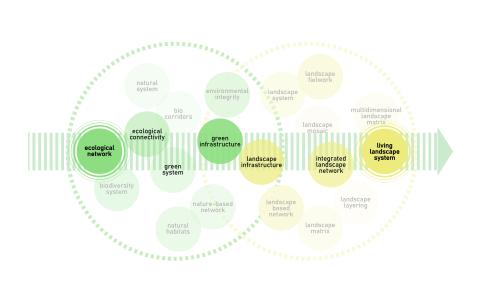
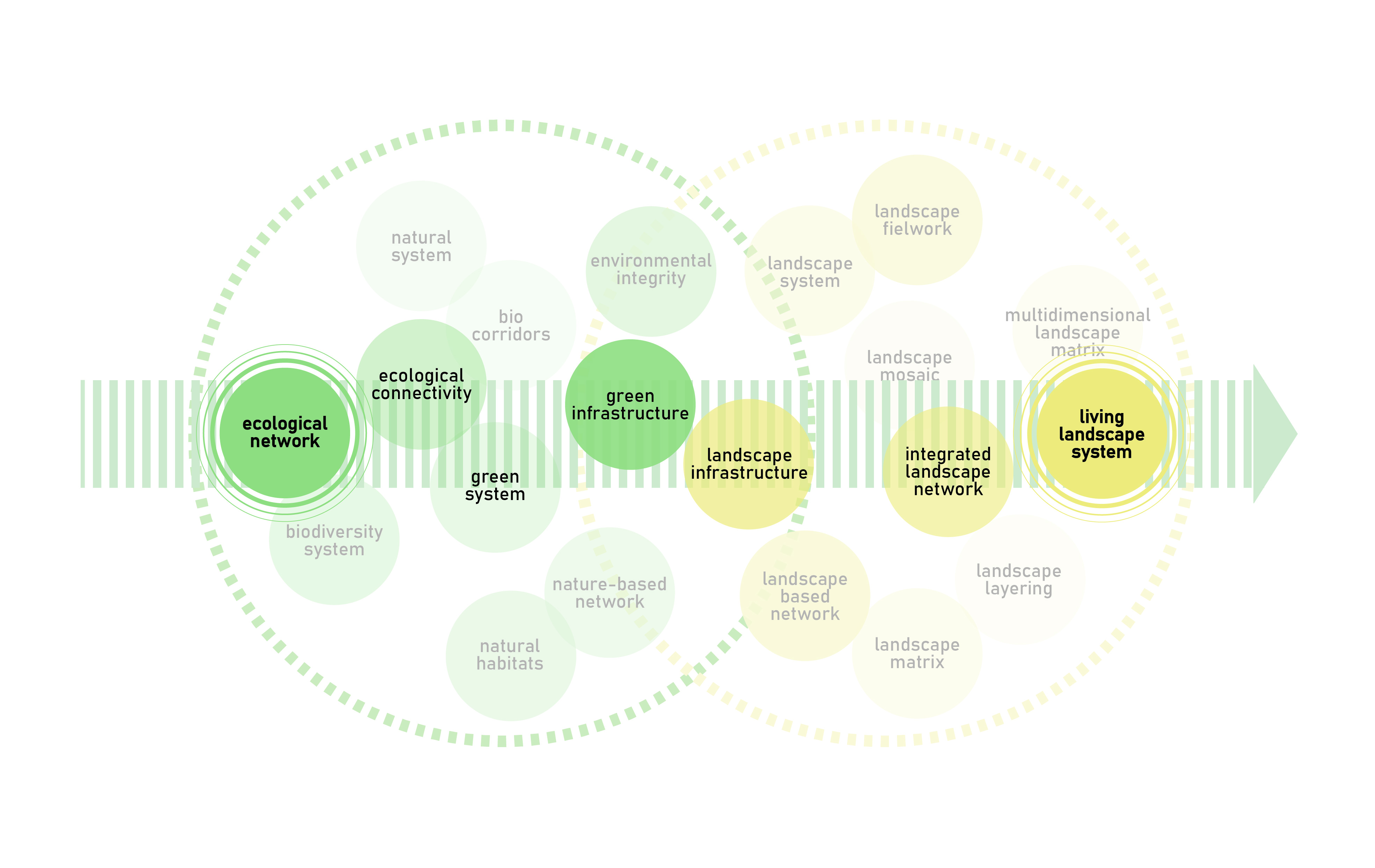
The paper is structured around a critical reinterpretation of the conceptual paradigms that have accompanied the evolution of ecological network planning. These paradigms provide the analytical framework through which the Mantua case study is examined, allowing the identification of three key design directions that characterise contemporary ecological network planning. Building on the dialogue between theoretical reconstruction and empirical evidence, the study ultimately suggests the emergence of a new landscape-centred paradigm intended to support the future evolution of ecological network planning.