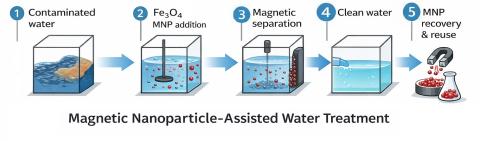
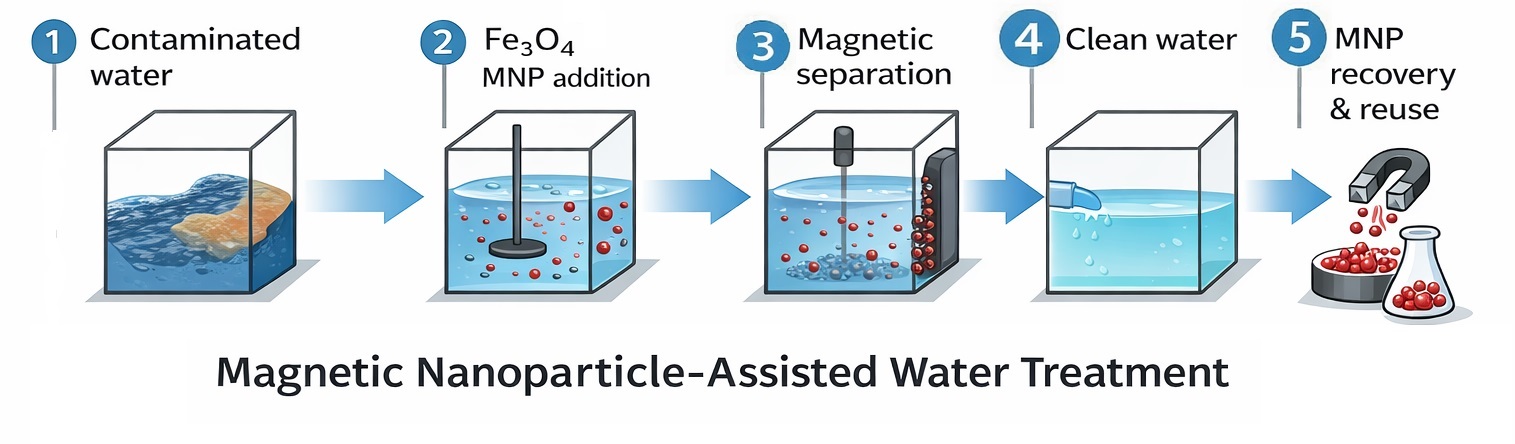
Advanced wastewater treatment increasingly involves the use of nanomaterials with catalytic adsorption reactivity along with a high surface area. Magnetic nanoparticles (Fe3O4) are being explored for this purpose in the context of heavy fuel oil treatment wastewater from gas turbine operation at the Al-Khairat power station (power plant station 1250-megawatts (MW)) in Karbala, Iraq. A batch reactor process, combined with chemical coagulation and flocculation, was used to treat the wastewater. This was followed by treatment with Fe3O4 nanoparticles (20-30 nm) to reduce Chemical Oxygen Demand (COD). The optimal conditions were investigated, including pH and nanoparticle concentration. The combined treatment significantly reduced turbidity (from 288 to 1.4 NTU). COD removal reached over 58% within 30 minutes under optimal conditions (pH 9 and 1 g/L Fe3O4 nanoparticles), and 50% removal was achieved after 1.5 hours. Further treatment via membrane filtration is planned to reduce Total Dissolved Solids (TDS) below 500 mg/L.