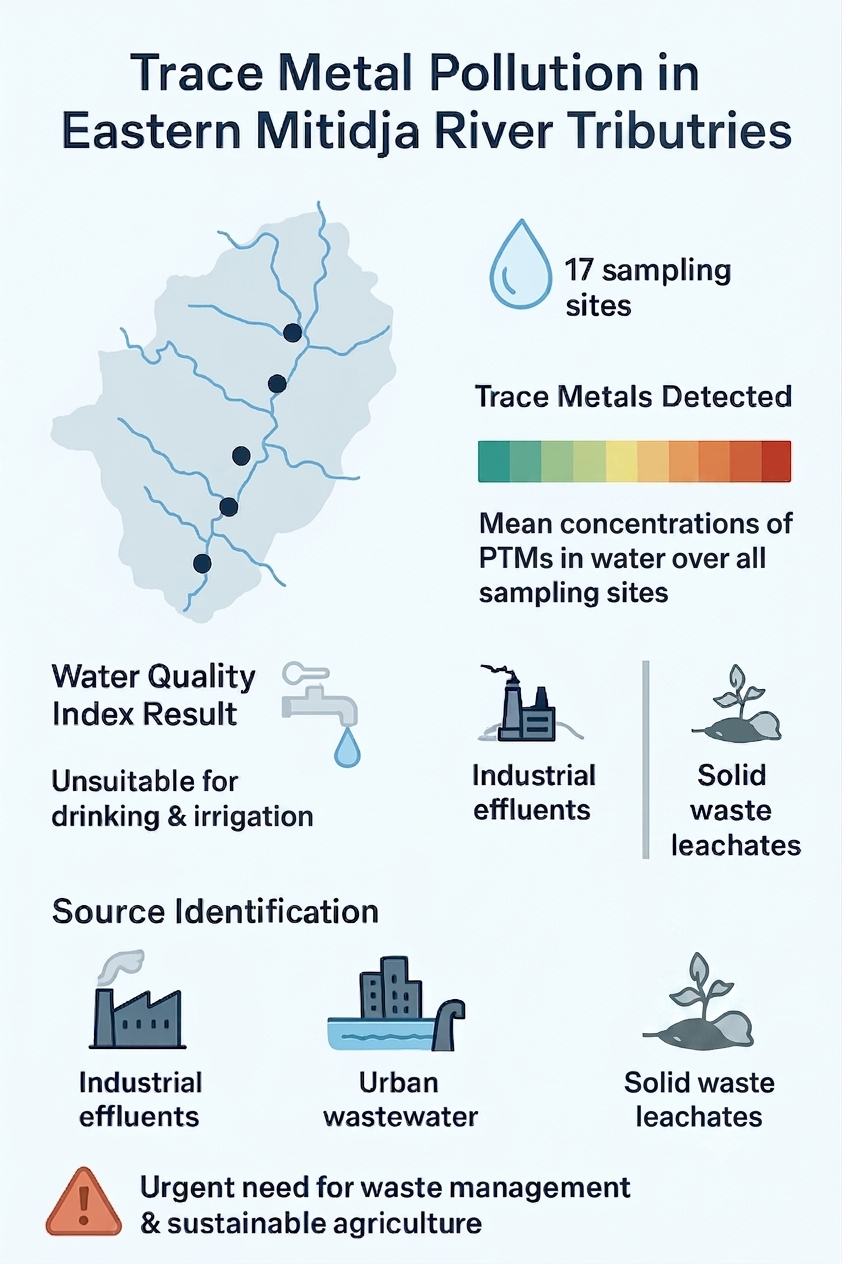
Water pollution is a global issue that threatens water security, affecting not only human health but also the environment and biodiversity. The work was conducted to assess the degree and sources of potentially trace metals (PTMs) contamination from the main river tributaries of the eastern Mitidja plain. Seventeen sites were selected for water sampling. The mean concentrations of PTMs in water over all the sampling sites were Cd 15.3, Cr 122, Cu 37.7, Fe 708, Ni 30.2, Pb 69.9 and Zn 133 μg/l. The overall mean concentration of PTMs in surface water showed the following order Fe > Zn > Cr > Pb > Cu > Ni > Cd. Based on the metal index, the results indicate that water quality is unsuitable for drinking purposes. For irrigation use, MI values indicate spatial variability in contamination levels, with conditions varying from slight to strong impact across sampling sites. Principal Component Analysis identified three main factors or sources that determine the relative abundance of trace metals. Excluding atmospheric deposition and runoff from agricultural areas, industrial and urban wastewater discharge and discharge from uncontrolled, solid-waste landfills are probably the main sources of water contamination. The findings of this study highlight the need to adopt environmental measures to reduce and control TM concentrations in the river water of the area. This includes implementing strict policies to manage industrial and urban waste, as well as promoting sustainable agricultural practices to minimize polluting runoff.