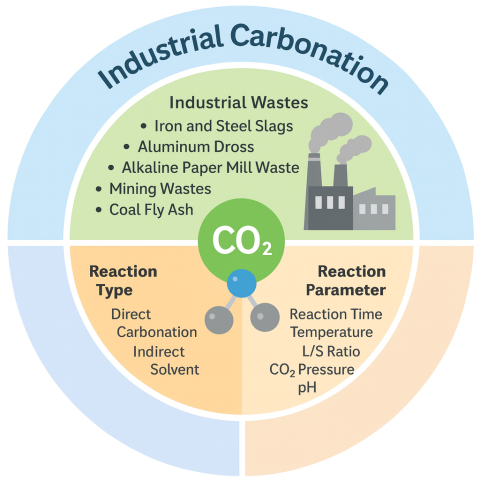
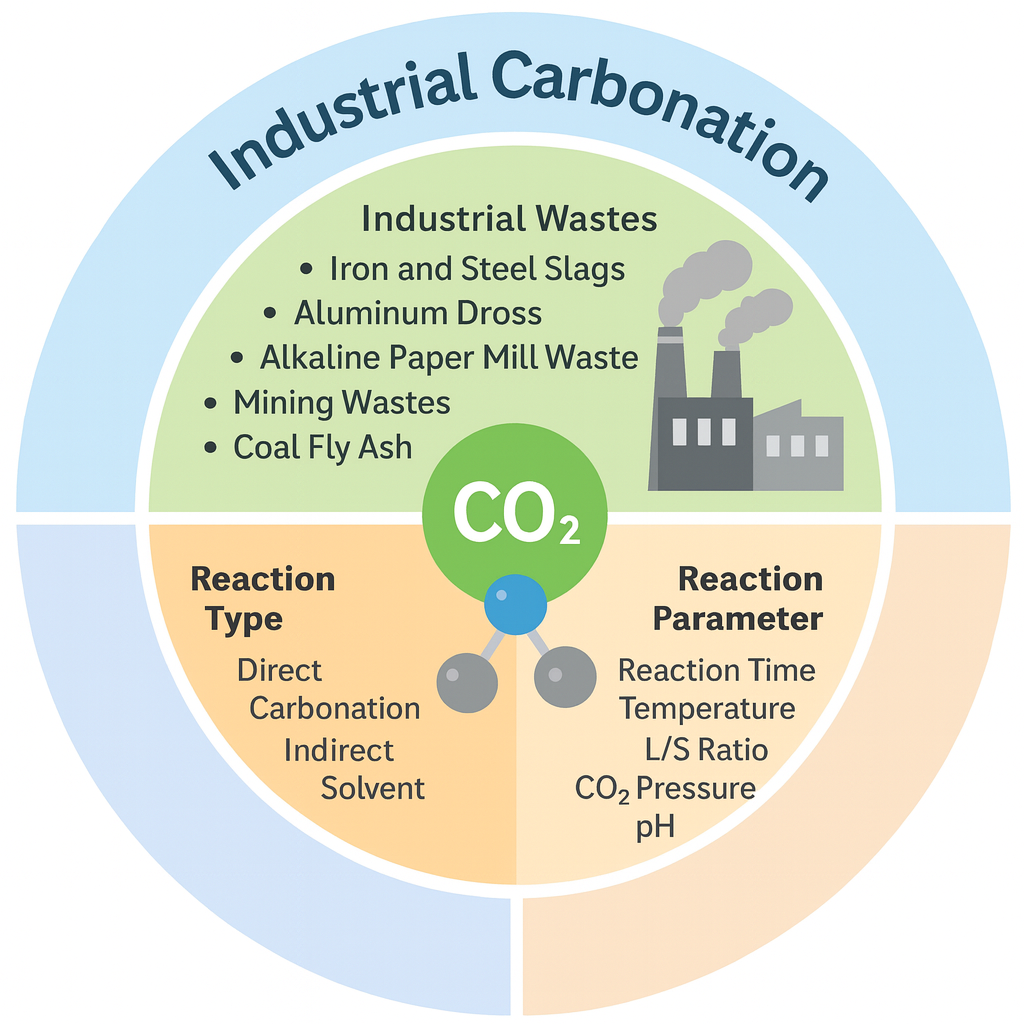
Global CO₂ emissions have exceeded 35 billion tons annually, intensifying climate change and necessitating scalable mitigation strategies. Mineral carbonation using industrial solid wastes such as steel slag, aluminum dross, fly ash, and flue gas desulfurization (FGD) gypsum has emerged as a sustainable and cost-effective approach for permanent CO₂ sequestration. This review examines carbonation pathways with emphasis on reaction kinetics, process conditions, reactor design, and value-added by-products. Quantitative evidence shows that steel slag-based aqueous carbonation systems can achieve ~80% calcium leaching efficiency and up to 71% carbonation efficiency in indirect processes, producing high-purity precipitated calcium carbonate (PCC 99.5%). FGD gypsum systems demonstrate CO₂ conversion efficiencies of 90–95%, while fly ash-derived sorbents can remove up to 70% CO₂ following activation. In comparison, aluminum dross carbonation proceeds rapidly (within <1 hour under ambient conditions) but with lower overall sequestration capacity. Emerging approaches, including the use of industrial wastewater as a reaction medium, offer simultaneous benefits of cost reduction and resource efficiency. Additionally, indirect carbonation of steel slag enables recovery of valuable metals (Al, Fe, Ti) with efficiencies exceeding 80%, improving economic feasibility. However, large-scale deployment remains constrained by energy demand, process complexity, and scale-up challenges. Future research should focus on process integration, solvent recycling, wastewater-assisted carbonation, and pilot-scale validation to advance these technologies toward commercial implementation within circular carbon management frameworks.