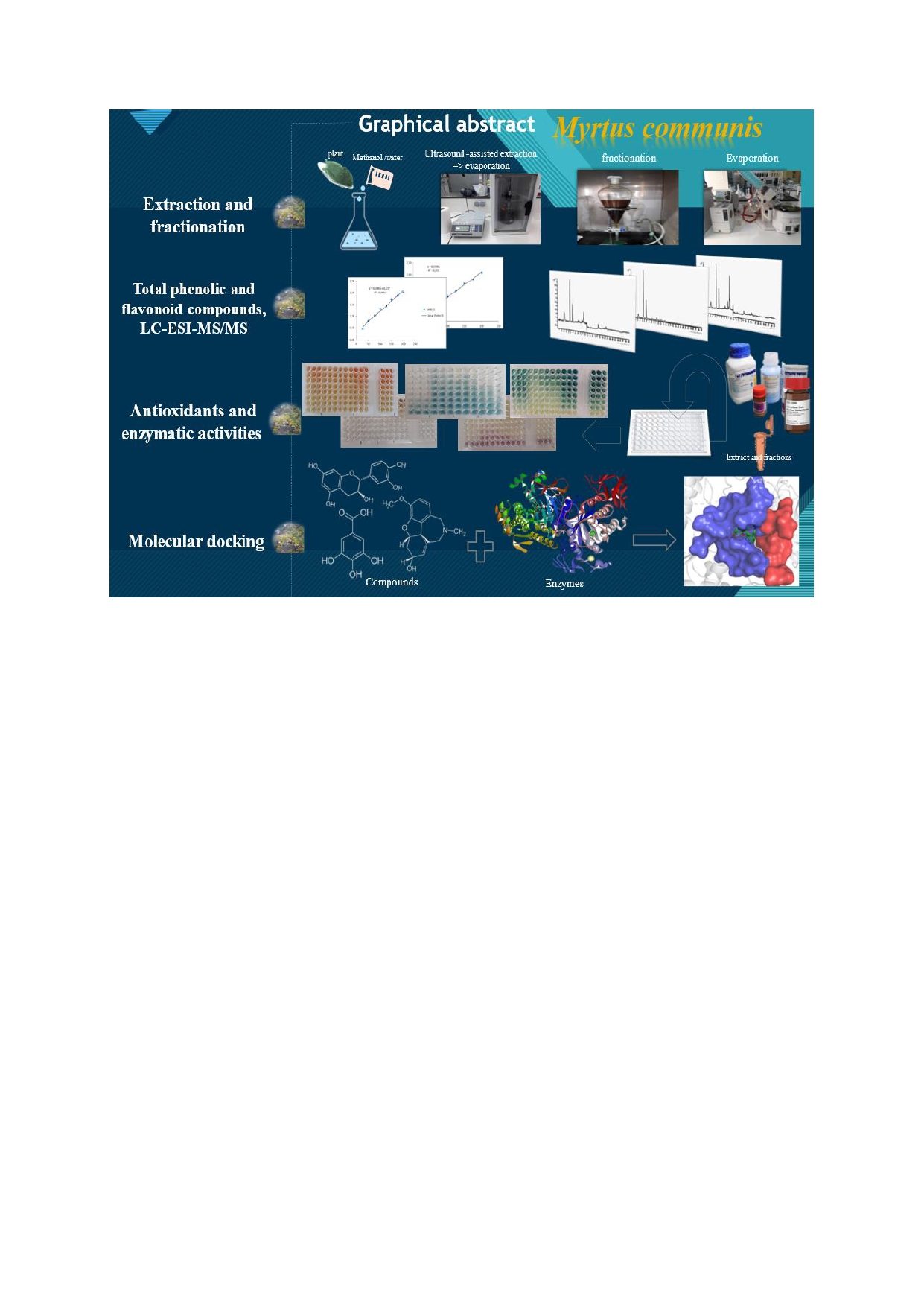
This study aimed to investigate in vitro the antioxidant, antidiabetic, anticholinesterase activities, and molecular docking, as well as LC-ESI-MS/MS analysis of hydromethanolic extract, ethyl acetate and N-butanol fractions from Myrtus communis leaves. LC-MS/MS analysis was conducted using 30 standards. The antioxidant activity was carried out using Ferric reducing power, ABTS•+, DPPH•, Silver Nanoparticles and phenanthroline methods. LC-ESI-MS/MS analyses of the hydromethanolic extract revealed high contents of gallic acid (278.150 µg L-1) and luteolin (112.214 µg L-1). The main constituents of ethyl acetate fraction were gallic acid (1502.228 µg L-1), epigallocatechin (1204.629 µg L-1) and catechin (410.925 µg L-1). In the N-butanol fraction, shikimic acid (2425.644 µg L-1), and gallic acid (220.417 µg L-1) were the primary constituents. Based on the antioxidant results, the extract and fractions demonstrated remarkable antioxidant activity. The most effective was ethyl acetate fraction with IC50 value inferior to 10 µg mL-1 against all tests used. Concerning the inhibition of cholinesterase, the hydromethanolic extract exhibited an interesting inhibitory effect against acetylcholinesterase (IC50= 22.82 µg mL-1) and butyrylcholinesterase (IC50= 10.70 µg mL-1). The extract and fractions showed significant inhibition against alpha amylase and alpha glucosidase, with IC50 ranging from 10.67 to 28.55 µg mL-1 and 3.45 to 5.05 µg mL-1, respectively. The docking study showed that gallic acid exhibited the most favorable binding energy towards α-glucosidase. Conversely, Catechin demonstrated superior binding energies for AChE, BChE, and α-amylase. In conclusion, this plant could be a valuable source of bioactive compounds with potential applications in prevention of many diseases linked to oxidative stress.